

Times Interest Earned Ratio Formula, Example, Analysis, Calculator

A company’s financial health depends on the total amount of debt, and the current income (earnings) the firm can times interest earned ratio generate. If the ratio is 3, for example, net debt is three times EBITDA.Reducing net debt and increasing EBITDA improves a company’s financial health. The times interest earned formula is EBIT (company’s earnings before interest and taxes) divided by total interest expense on debt.
- A higher ratio is favorable for the company as it indicates its efficiency in handling assets whereas a lower ratio indicates the opposite.
- The times interest earned (TIE) ratio, also known as the interest coverage ratio, measures how easily a company can pay its debts with its current income.
- In this case study, we will delve into the financials of Company XYZ and analyze these ratios to gain insights into the company’s financial situation.
- The times interest ratio, also known as the interest coverage ratio, is a measure of a company’s ability to pay its debts.
- This ratio determines whether you are in a position to pay the interest to the venture capitalists for fundraising with your retained earnings.
- Companies that have a times interest earned ratio of less than 2.5 are considered a much higher risk for bankruptcy or default.
Can the TIE Ratio predict financial distress or bankruptcy accurately?
- This is because the IFRS Conceptual Framework defines income as arising from a growth in assets or reduction in liabilities, whereas negative investment interest is a reduction in assets.
- The balances of the amount of debt borrowed from financial lenders or created through bond issuance, less repaid amounts, are included in separate line items in the liabilities section of the balance sheet.
- For example, if a business earns $50,000 in EBIT annually and it pays $20,000 in interest every year on its debts, figuring the times interest earned ratio requires dividing $50,000 by $20,000.
- A single ratio may not mean anything because it could only speak for one set of revenues and earnings.
- Although it is not necessary for you to repay debt obligations multiple times, a higher ratio indicates that you have more revenue.
While no single financial ratio provides a complete picture, the TIE ratio offers a straightforward yet powerful gauge of solvency that complements other metrics in comprehensive financial analysis. When properly calculated and interpreted within industry contexts and alongside trend analysis, it serves as an early warning system for potential financial distress and a valuable indicator of debt capacity. The ratio does not seek to determine how profitable a company is, but rather its capability to pay off its debt and remain financially solvent. If a company can no longer make interest payments on its debt, it is most likely not solvent. Therefore, if your company finds it difficult to pay fixed expenses such as interest, you could be at risk of bankruptcy. As such, the times interest ratio shows that you may need to pay off existing debt obligations before assuming additional debt.

Discussing the ideal range for each ratio and what it indicates about a company’s financial strength
Further, to get the account receivables turnover in days, divide 365 by the accounts receivable turnover ratio. This will give the average number of days your customer takes to pay their debts. Industry benchmarks are either derived from these company-driven multiples or from credible industry benchmark databases. It is up to a financial analyst to use trend analysis, common size analysis, and ratio analysis to compare the subject company and the selected benchmarks in order to create a reliable multiple. This video about times interest earned explains how to calculate it and why the ratio is useful, and it provides an example.
Understanding the Benefits and Challenges of Excel Dashboard Design and Development

Debts may include notes payable, lines of credit, and interest obligations on bonds. Whether QuickBooks ProAdvisor it’s the way the industry operates, economic recessions, technological advances, or changes in consumer trends, these outside issues need to be considered when analyzing a company’s finances. Comparing the ratio to other similar companies within your industry may help determine how you are positioned within the current economic landscape. In this case, adjusted operating cash flow may be used instead of EBIT to calculate the times interest earned ratio. The “coverage” represents the number of times a company can successfully pay its obligations with its earnings. A low ratio may signal that the company has high debt expenses with minimal capital.

It is used by investors and creditors to assess a company’s financial health and solvency. Investors may also be cool to debt securities or stock sales by companies with low times interest earned ratios. Businesses contemplating issuing bonds or making public stock offerings often consider their times interest earned ratio to help them decide how successful the initiative will be.

- The times interest earned ratio is calculated by dividing income before interest and income taxes by the interest expense.
- By automating data analysis, accounting software helps small business owners to measure their company’s capability to meet its debt obligations quickly, freeing up time that can be spent on growing their business.
- The TIE ratio also informs stakeholders whether a company can afford to take on more debt.
- Times interest earned (TIE) ratio shows how many times the annual interest expenses are covered by the net operating income (income before interest and tax) of the company.
- Additionally, it affects the management of existing debts, specifically regarding refinancing or restructuring the principal and interest payments.
On a financial statement, you may list interest income separately from income expenses, or provide a net interest number that’s either positive or negative. As a solution, EBITDA (earnings before interest, taxes, depreciation, and amortization) should be used instead. Being non-cash expenses, depreciation and amortization will not affect the company’s cash position in any way. The efficiency and turnover measures the ability of the company to manage its assets and liabilities efficiently for the company.
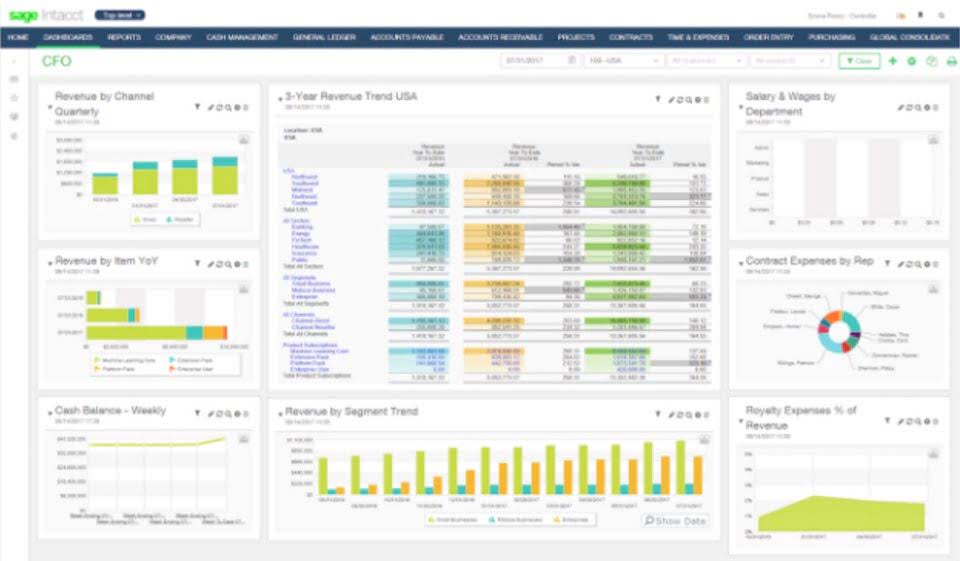
Leverage Your Data with Excel Dashboards
A higher FAT ratio indicates that the management has efficiently used its fixed assets to generate revenue for the what are retained earnings company while a lower FAT ratio points at the opposite. The best way to use this ratio is to compare the company’s present ratio to its historical ratio as well as the one of competitors and industry average. The accounts receivables turnover ratio helps determine such lapses and directs the company towards a healthy accounting system with respect to its customers. This ratio is also frequently used in financial modeling as an important assumption for balance sheet forecast. In comparison, the quick ratio is far more conservative than the current ratio which accounts for only the current assets. Nevertheless, a fair judgment of the company’s liquidity position can only be assessed when multiple ratios are considered in unison.

Deja un comentario